By: Stephen Kamlasaran | The 2005 animated film “Robots” introduced me to the work ethic of its inventor, Bigweld: “See a need, fill a need.” For twenty years, that simple directive has stuck with me. It’s a concept that transcends a “kid’s movie” and finds resonance in the most practical aspects of adult life.....
March 2026
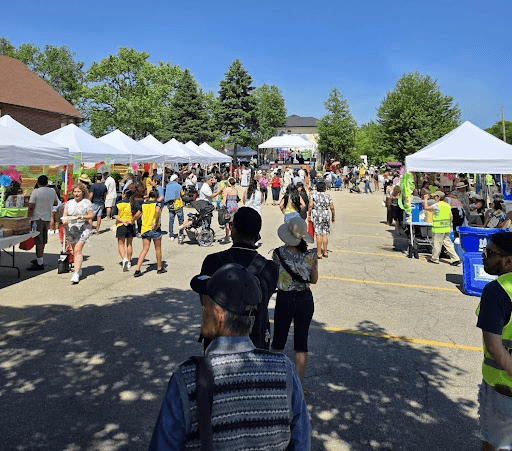
The 2005 animated film “Robots” introduced me to the work ethic of its inventor, Bigweld: “See a need, fill a need.” For twenty years, that simple directive has stuck with me. It’s a concept that transcends a “kid’s movie” and finds resonance in the most practical aspects of adult life. In the real world, the systemic issues related to social determinants of health, and circumstantial barriers such as language proficiency, educational gaps, lack of transportation, and racism, all need real-world solutions. Fundamental human needs persist, none more critical than the need for safe and secure housing. It was precisely this chasm between human needs and systemic access that the Pop-Up Mobile Housing Supports Hub was created to address.
The project’s genius lies not in a grandiose plan to overhaul the social service system, but in a humble, strategic approach to strengthen and reinforce it. The core philosophy was always one of collaboration, not competition; of augmentation, not replacement. The goal was never to compete with the work of the countless boots-on-the-ground community services, but to complement them. We aren’t trying to reinvent the wheel, we are simply adding a spoke to it.
This vision was brought to life in Phase 1 (January-September 2024), which served as the foundational framework for the entire initiative. The strategy was straightforward yet revolutionary: We meet people where they are at - literally and figuratively. Instead of waiting for vulnerable residents to visit community hubs or multiple agencies in various locations - navigate a complex, often intimidating web of services, a mobile team of service providers would bring resources and information directly to them. It identified four key locations within shelters and food banks: Lawrence Heights and Oriole Community Food Spaces, Willowdale Welcome Centre, and 101 Placer Court, where newcomers and housing-insecure individuals were already gathering out of necessity. Through environmental scans and direct needs assessments with residents, the project, led by a core coalition of 14 diverse agencies, designed targeted support services.
They engaged in 13 pop-up events, created a vital Community Resources Booklet available in seven languages, and saw their partnership network blossom to 25 agencies. The feedback was a resounding validation of the model. One community participant shared, “The event was so much helpful to us as it will make us move forward an extra mile to our day-to-day life.” A partner agency
noted, “This pop-up should be done on an ongoing basis. It provides an opportunity to take services to where they are needed.” The wheel was turning, and the first new spokes were holding strong.
Bolstered by the success of Phase 1, Phase 2 (February-November 2025) evolved the model, intentionally adding another critical spoke to the community support wheel. The project strategically expanded its reach into faith-based spaces, setting up pop-up hubs at locations like San Lorenzo Church, Cummer Avenue United Church, and the North York Chinese Baptist Church. This was a deliberate recognition of the unique role these institutions play as trusted anchors within their communities, often providing a different kind of sanctuary for marginalized individuals. As Project Lead Sarah Modesta Sepillo reflected, “What has stood out to me most is how faith communities have opened their doors to create safe and welcoming spaces for neighbours facing very difficult circumstances.”
This expansion was not without its challenges, however, as the team navigated the complexities of ensuring equitable representation and engagement across various faith denominations (churches, mosques, synagogues, and temples), managed lengthy site approval processes, and operated with limited staff capacity, relying on the dedication of volunteers and summer students. The robust network built in Phase 1 provided a sturdy foundation to overcome these hurdles. The results were profound as the project deepened its partnerships, leading to faster referral pathways and more in-depth support. It enhanced collaboration through innovative outreach, including radio promotions on CHHA 1610 AM, to empower more community members. Sarah observed this evolution, stating, “To help bridge gaps, we have leaned on our Mobile Team partners and expanded our network... Each pop-up is shaped by participants’ feedback, making the mobile hub more responsive and effective with every event.”
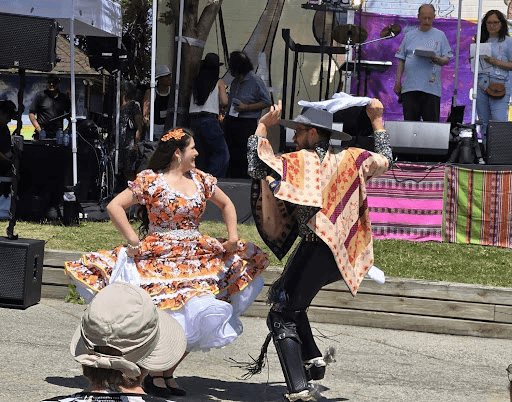
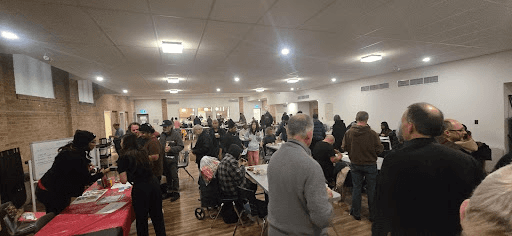
My personal volunteer experiences at these pop-ups became a living testament to this adaptive model. In June, I volunteered at the Inti Raymi (“Sun Festival”) Latin Festival at San Lorenzo Church, a vibrant celebration attracting thousands. Amid the performers and vendors, our pop-up hub, led by TNO in collaboration with various partner agencies, became a great addition to the event for resources and connections. Later, at the Cummer Avenue United Church (CAUC), the atmosphere was more intimate but equally powerful. A warm breakfast was provided by the church, lunch by volunteers from another organization, and I helped manage a raffle and information session. The energy in the room was a powerful dichotomy. Community members were rightfully direct and candid about their struggles with housing, unemployment, and a medical support system that was failing them.
Their frustrations were palpable. Yet, simultaneously, there was an overwhelming sense of friendliness and gratitude that completely superseded the negative stereotypes often assigned
to those experiencing hardship. The simple act of receiving a donated raffle prize, a Presto card, or a warm meal in a safe, welcoming space was met with profound thanks.
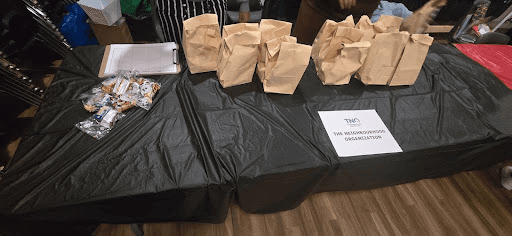
The scene at CAUC stood in stark contrast to a conversation I had with a few people I know. From a point of privilege, they were critical of those "slipping through the cracks," dismissively labeling them as people who didn't want help. They were wrong. The more than 40 individuals who approached our table at CAUC alone, earnestly inquiring about housing, employment, and settlement services, proved them wrong.
The palpable gratitude in the room proved them wrong. It is easy to complain about a problem, and even easier to critique a proposed solution. The actual difficulty lies in the implementation: a process that demands immense time, energy, willpower, and, most importantly, empathy. This is the hard work the Pop-Up Hub undertakes.
The future of the Pop-Up Mobile Housing Supports Hub, as with all community-driven initiatives depend on securing ongoing funding. However, the evidence of its success is undeniable. It has demonstrated a powerful, feedback-driven model that provides real-time, on-the-ground population scans and needs assessments simply by listening and showing up. By weaving together a resilient tapestry of agency partners, faith organizations, government officials, and community volunteers, the project does not create a parallel system. Instead, it strengthens the entire existing structure, adding flexibility, reach, and a deeply human touch. It ensures that the wheel of community support can turn more smoothly, reliably, and inclusively for every person it reaches, proving that sometimes the most powerful innovation is not a new wheel, but a stronger, better-connected one.
Photo Source: (All photos were taken by Stephen Kamlasaran)